Tips For Riding Dirt and Gravel Roads
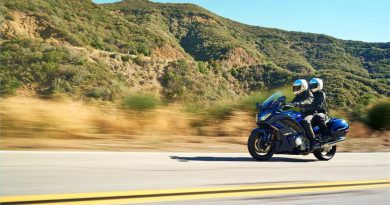
Sport touring is about discovery. It’s about riding beyond the familiar to discover new roads and the excitement that lies in the unknown. While routes may be carefully planned, mapped only on paved roads, even the best laid routes don’t always turn out as expected.
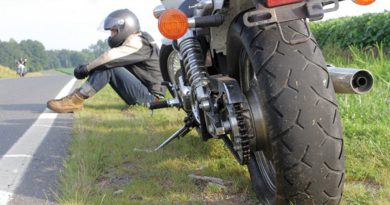
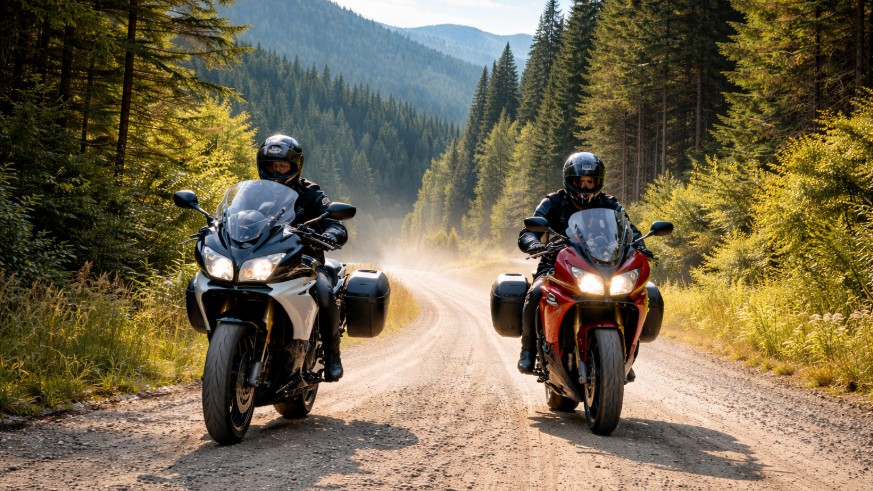
A worthwhile scenic landmark, road construction, or a mistaken turn can land you on a dirt or gravel road with little warning – and no good options. Sometimes it’s just a short stretch through a construction zone. Other times, an accidental detour can lead to several miles of loose surface before rejoining pavement.
There’s no need to become nervous when the pavement ends. Encountering unpaved roads doesn’t have to derail long anticipated rides – provided you keep a few practical skills in mind.
When The Pavement Ends
Before diving into the tips, it’s worthwhile to establish a common understanding of the situations this article addresses.
We’re not talking to riders who intentionally seek out forest roads or trail adventures. If that’s your goal, you’re likely already well prepared, both mentally and mechanically. Instead, we’re assuming you’re on a sport touring ride, riding a sport touring motorcycle – and intent on keeping to streets and not trails.
Having said that, in practice the distinction between motorcycles matters less than many riders expect. On unplanned dirt and gravel roads most sport touring riders encounter, the bike itself is rarely the deciding factor. Rather, fundamentals – smooth inputs, balance, and vision – make the real difference, and they apply regardless of what motorcycle you’re riding.
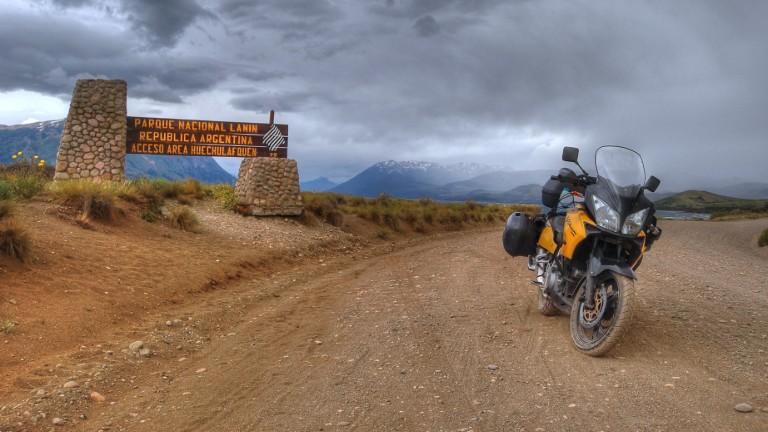
It’s also worth noting that unpaved roads become notably more demanding in wet conditions. Rain reduces traction, loosens the surface, and can hide ruts or soft patches – turning an already questionable surface into one that requires even smoother inputs and extra patience.
Practical Tips for Riding on Gravel
With that as context, the following tips focus on practical techniques to help sport touring riders stay composed and in control when pavement turns to dirt or gravel. These are not advanced off-road skills, but proven fundamentals that make loose surfaces more manageable and far less intimidating.
1. Gear up
Chances are you’re already wearing proper riding gear – helmet, gloves, boots, a jacket, and riding pants. That matters, because the likelihood of a low-speed fall is higher on a loose surface than on pavement. Proper gear won’t prevent a crash, but it can significantly reduce injury if things don’t go as planned.
2. Visor down – While preserving visibility
Keeping your helmet visor down helps protect your eyes from flying debris and dust, especially when following another rider. There is a tradeoff however – dust on the visor combined with low sun or direct sun can reduce contrast and make hazards harder to see. Always put a priority on clear vision when riding off pavement.
3. Keep your eyes up – Read the surface
Looking far ahead is common advice for any ride, but on dirt and gravel roads keeping your eyes up is critical. Scan far enough down the road to spot changes in surface, deeper patches of loose material, or large rocks early. The goal is to give yourself time to make smooth, deliberate adjustments rather than abrupt corrections.
4. Use ride modes thoughtfully
If your bike offers selectable ride modes, a rain or reduced-power mode can be helpful on unpaved roads – but only if you understand what it actually changes on your motorcycle. Softer throttle response and increased traction control can smooth power delivery and reduce abrupt wheelspin. However, some modes also alter engine braking or ABS behavior in ways that may not be ideal on loose surfaces. Choose a setting that tempers inputs without removing useful rider control.
5. Relax your grip – Let the bike move
Tension is your enemy on gravel. Relax your arms, keep your elbows slightly out, and hold the bars lightly. Allow the bike to move beneath you as it responds to variations in the surface. Trying to push back against every twitch or counter small corrections often makes the bike feel more unstable, not less.
6. Smooth and light inputs
The bike may feel unsettled – and in many ways it is – but abrupt throttle, steering, or brake inputs only magnify that instability. Maintain steady throttle and make small, measured steering adjustments. Smoothness is far more important than precision.
7. Apply both brakes but carefully up front
On dirt and gravel, braking technique matters. Use both brakes, brake in a straight line (as always), and importantly apply the front brake progressively and gently to avoid overwhelming the front tire’s limited traction. At lower speeds or in especially loose conditions, it’s common to rely slightly more on the rear brake than you would on pavement. This becomes even more important when riding two-up or with luggage.
8. Manage your body position
At typical gravel road speeds, you still initiate turns by leaning the bike, but you’ll often use more counterbalance than on pavement – keeping your body slightly more upright while the bike leans beneath you. Shifting a small amount of weight toward the outside of a turn can help maintain balance and reduce demand on the front tire. Combined with smooth throttle and gentle steering inputs, subtle body movement allows the bike to track more naturally across uneven terrain.
9. Be deliberate when stopping
When you need to come to a stop on gravel, pay attention to where you put your foot down. Loose stones, ruts, and uneven surfaces are easy to miss until the bike starts to lean farther than expected. A moment’s pause before committing your footing can prevent an awkward tip-over.
10. Standing is optional
Adventure riders often stand to improve visibility and give the bike more freedom to move, which can be useful on rough sections. That said, standing isn’t required for most short unpaved detours, and rubber-isolators on sport touring bike foot pegs can become slippery. On dirt and gravel roads – compared with off-road trails – remaining seated typically offers plenty of control for confident braking and balance. Use the position that provides the greatest stability for the conditions at hand.
11. Shift weight rearward in deep gravel or sand
If gravel or sand become deeper or looser than expected, move a bit more weight toward the rear of the bike. This helps keep the front tire from plowing and improves overall stability. Maintain steady throttle and avoid abrupt steering inputs while the bike seems to “swim” through as it searches for traction.
12. When a fall is inevitable prioritize your safety
If you are fairly certain the bike is going down, don’t sacrifice your body trying to save it. Do what you reasonably can, but stay loose, protect your limbs, and avoid getting pinned underneath the motorcycle.
Make Time to Practice
Sooner or later, every sport touring rider encounters an unpaved road. They are rarely as intimidating as they first appear, and after a mile or two nerves settle and the road starts to feel rideable. That’s also the moment you cannot let your guard down.
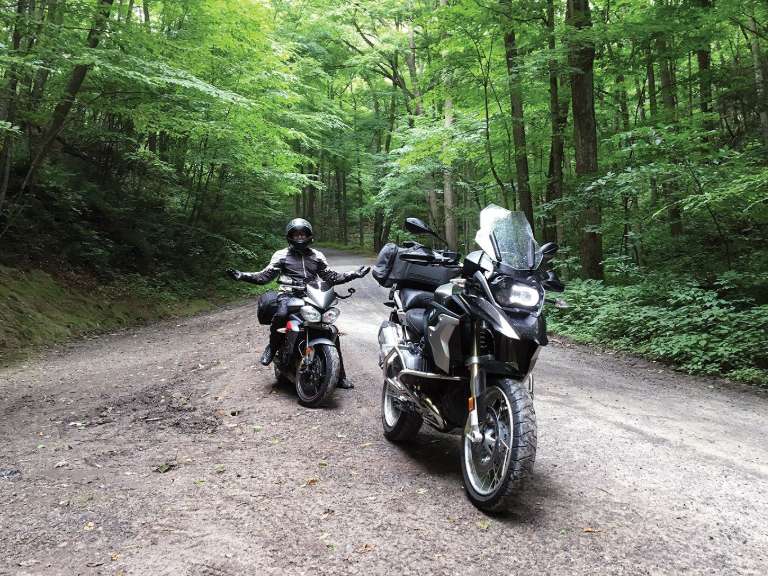
Learn the fundamentals, and consider spending time in a quiet gravel parking lot to practice and build confidence in a controlled setting. With a little effort, the possibility of riding dirt and gravel roads will no longer dampen excitement for your next sport touring adventure.
Did you like this article?
Thank you for your feedback!
Please email the editor with any additional comments.
Your feedback is used only by American Sport Touring. We do not store or sell your information.
Please read our Privacy Policy.

by John DeVitis, Editor and Publisher
John DeVitis, Editor & Publisher of American Sport Touring, has spent years riding and writing with a focus on long-distance, performance-oriented motorcycling. His time on the road has revealed little-known routes across the United States and Canada, along with practical insights into the bikes, gear, and techniques that matter to sport touring riders. He draws on this experience, together with a background in digital publishing, to guide the editorial principles and clear vision behind American Sport Touring, delivering content riders can trust.