Ride to Saratoga: Turning Point in the Birth of a Nation
This article is part of an American Sport Touring destination ride series marking the 250th anniversary of the Declaration of Independence. The series explores places that shaped the character of the country, each paired with nearby motorcycle roads that give riders a compelling way to experience both the destination and the landscape around it.
A Ride into History
Early on a cool autumn morning, riders heading north from Albany find the landscape of the Hudson River Valley slowly opening around them. Along US Route 4, near the Empire State Trail corridor, the road traces the river through broad farmland and low wooded ridges. The Hudson appears and disappears behind trees and bluffs while long sweepers and gentle elevation changes make it easy to settle into a comfortable rhythm.
It’s easy to lose yourself in the roads and overlook the history that surrounds them.
But just ahead, off New York State Route 32, lies one of the most consequential landscapes in American history: Saratoga National Historical Park, where a pivotal victory during the American Revolution helped change the fate of the emerging United States.
Today the quiet fields and wooded hills preserve the ground where that turning point unfolded. For riders, Saratoga offers something rare: a place where rewarding roads and nationally significant history meet.
Why This Place Matters
By the fall of 1777, the American Revolution had already been underway for more than two years. British forces controlled several major cities and possessed the most powerful army and navy in the world. The rebellion in the colonies was far from certain to succeed.
British strategy focused on controlling the Hudson River corridor, a natural transportation route that connected Canada with New York City. If British forces could dominate the valley, they could effectively split the colonies in two and isolate New England—the heart of the rebellion—from the rest of the colonies.
General John Burgoyne led a large British army south from Canada along this route in the summer of 1777. His plan was to move down the Hudson Valley while other British forces advanced north from New York City.
Instead, American forces under Horatio Gates, with aggressive leadership from Benedict Arnold, stopped the advance near Saratoga.
Two major engagements followed in September and October of 1777. After weeks of fighting and maneuvering, Burgoyne’s army found itself surrounded and cut off from supplies. On October 17, Burgoyne surrendered his entire force.
The victory at Saratoga transformed the war. Convinced that the American cause might succeed, France soon entered the conflict on the side of the colonies—providing troops, ships, and critical financial support. Without that alliance, the outcome of the revolution might have been very different. As the nation approaches the 250th anniversary of the Declaration of Independence, Saratoga stands out as the place where the fight for independence became a war the Americans could realistically win.
What Remains Today
Today the battlefield is preserved within Saratoga National Historical Park, a landscape of open farmland, wooded ridges, and quiet meadows that still resemble the terrain of the eighteenth century.
The park’s Battlefield Tour Road forms a roughly ten-mile loop that connects many of the key locations from the campaign. Riders can follow the road through the heart of the battlefield while stopping at interpretive sites along the way.
Freeman Farm marks the location of the first major clash between American and British forces. Nearby fields and tree lines help visitors visualize how soldiers advanced and fought across the terrain.
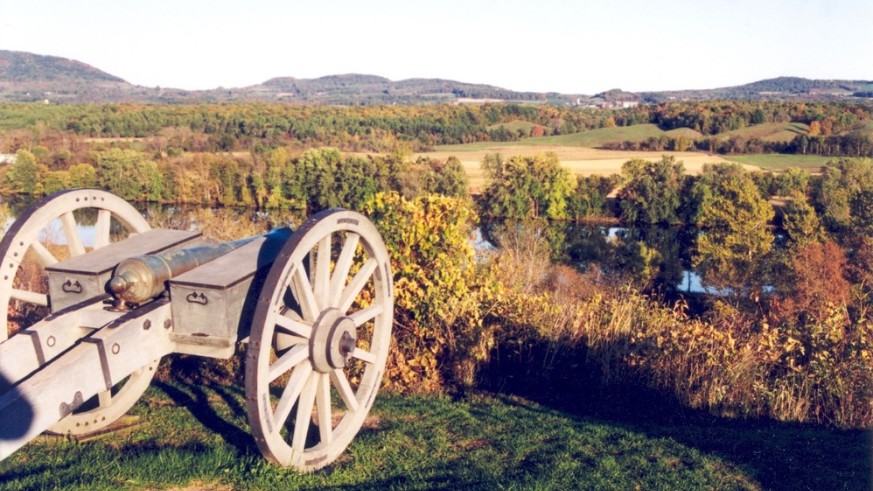
Farther along the tour road, the ridge at Bemis Heights reveals the strategic advantage held by the American army. From these heights, American artillery controlled the surrounding valley and helped trap Burgoyne’s forces.
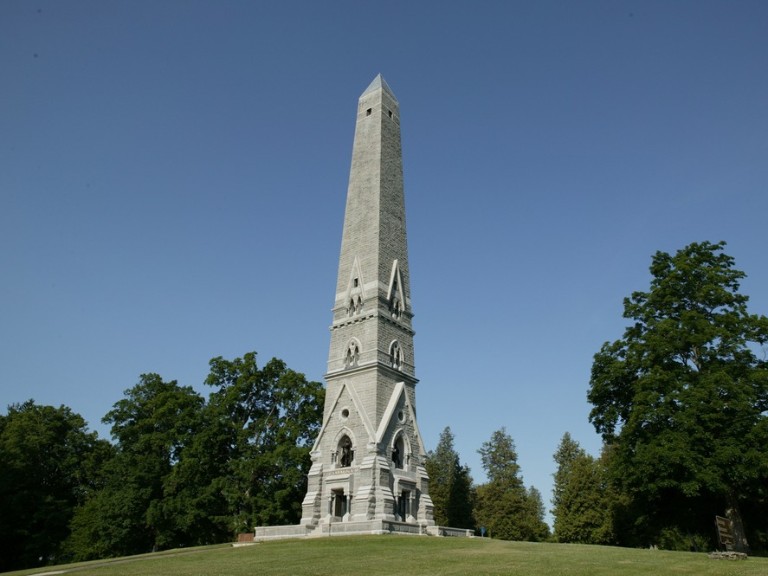
Monuments, historic markers, and a visitor center provide context to the events of the campaign, but the landscape itself remains the most powerful artifact. Walking the ground where armies once maneuvered offers a direct connection to the moment when the war’s trajectory changed.
Just a few miles north of the battlefield lies Saratoga National Cemetery, established after the Civil War and now the resting place of thousands of American veterans. Its presence reflects how Saratoga’s Revolutionary War victory later became part of the broader story of the nation’s military history.
Stories from the Landscape
Beyond the major battle narratives, Saratoga contains smaller stories that bring the events of 1777 to life.
One of the most dramatic involves Benedict Arnold, whose battlefield leadership proved decisive during the second battle of Saratoga. Despite being relieved of command during the campaign, Arnold reportedly rode onto the battlefield and personally led an aggressive charge that helped break the British defenses. Ironically, the same man who played a heroic role at Saratoga would later become synonymous with betrayal after defecting to the British side.
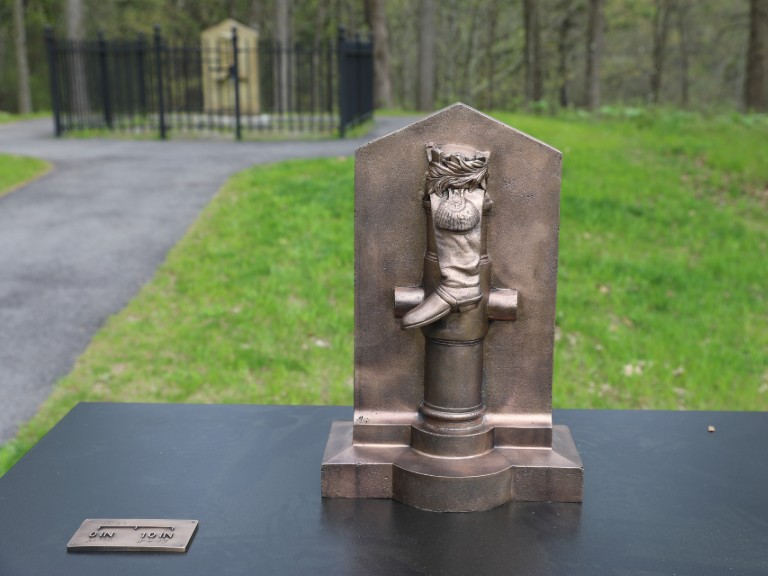
Among the park’s most intriguing features is the Boot Monument, which commemorates Arnold’s wounded leg without actually naming him—a subtle acknowledgment of both his contribution at Saratoga and his later treason.
Riders who explore the battlefield may also encounter the Great Redoubt, a large British defensive position built late in the campaign. A redoubt was a temporary earthwork fortification designed to protect soldiers and artillery, and the remaining contours of the Great Redoubt are still visible in the landscape.
Standing there makes it easier to imagine Burgoyne’s desperate position in October 1777. Surrounded by American forces and running short of supplies, British soldiers dug in for what they hoped would be a final defensive stand. Within days, the army would surrender.
The preserved earthworks are a rare physical reminder of eighteenth-century battlefield engineering, and they reinforce a broader point: the American Revolution was shaped not only by grand strategy, but also by the complex actions of individuals on the battlefield.
Getting There
Saratoga National Historical Park sits in the Hudson River Valley about 40 miles north of Albany, New York, near the historic village of Schuylerville and a short ride from Saratoga Springs. Getting to the park is straightforward for riders exploring the northeastern United States.
Riders approaching from the south typically follow Interstate 87—known locally as the Adirondack Northway—before exiting toward Saratoga Springs or the Hudson River Valley. From there, regional highways such as New York State Route 32 lead north through rural farmland and small historic towns.
Route 32 passes directly by the main entrance to Saratoga National Historical Park, making it the most straightforward approach to the battlefield.
Another approach follows US Route 4 through the Hudson River corridor from Stillwater to Schuylerville, tracing the same valley that British forces marched during the Saratoga campaign.
Once in the area, signs along Route 32 guide visitors directly to the park entrance and visitor center.
Make It a Ride
Saratoga National Historical Park makes an excellent anchor point for a longer sport touring ride through upstate New York. With the Hudson River Valley to the east and the Adirondack Mountains to the north and west, riders can easily turn a visit to the battlefield into a full day—or several days—of memorable riding.
North into the Adirondacks
One rewarding ride in the area heads north from the battlefield toward Adirondack Park, one of the largest protected landscapes in the United States. From Saratoga, riders can work north through towns such as Glens Falls and Lake George, entering the Adirondack region as the terrain begins to rise and the roads tighten into more engaging curves.
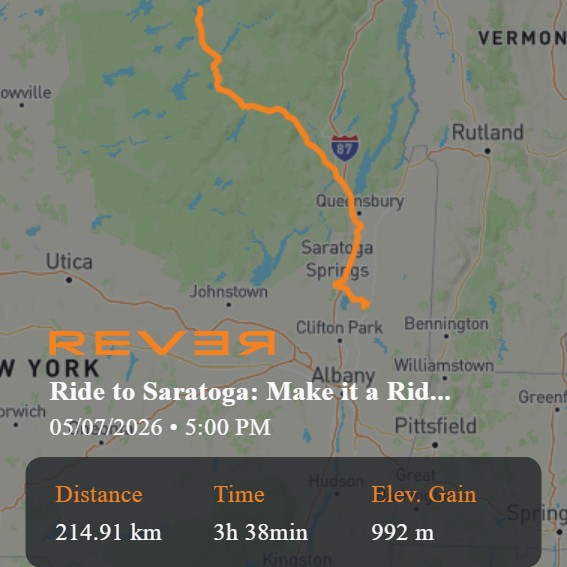
From there, several excellent routing options open up. Riders can continue north toward Lake Placid, a historic mountain town best known for hosting the Winter Olympics and surrounded by classic Adirondack scenery. Another option approaches the park’s interior using New York State Route 28N, which runs through the heart of the Adirondacks past lakes, forests, and small wilderness communities before reaching Tupper Lake.
Either route places riders deep within the Adirondack landscape—an immense park of mountains, forests, and waterways where long stretches of lightly traveled pavement make for some of the most enjoyable sport touring roads in the Northeast.
Southern Adirondack Loop
A second rewarding ride heads west from Saratoga toward the southern edge of the Adirondack region, looping around the Shaker Mountain Wild Forest and along the eastern boundary of Ferris Lake Wild Forest, roughly 50 miles from the battlefield.
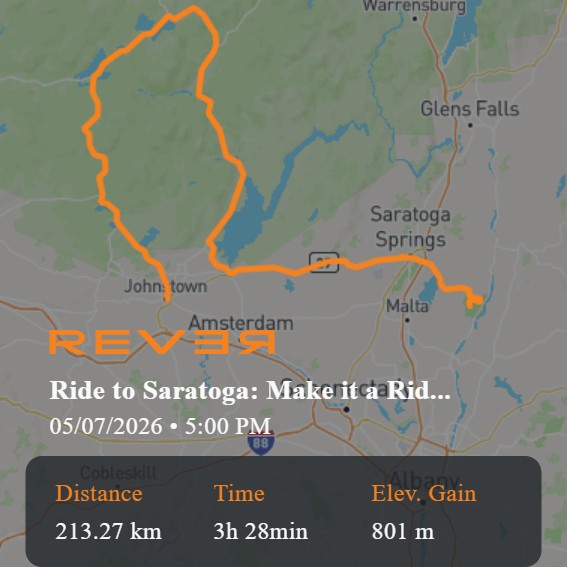
From Saratoga, riders can set a course for Mayfield, a small community near the southern shore of the Great Sacandaga Lake and a natural gateway to the Adirondack foothills. From there, continue north through increasingly wooded terrain toward Lake Pleasant, where the landscape transitions fully into Adirondack forest.
At Lake Pleasant, turn south along New York State Route 10, a lightly traveled road that winds through dense hardwood forests and past quiet lakes as it approaches Arietta. This stretch passes directly through the heart of the Shaker Mountain Wild Forest, an area known for its remote character, rolling terrain, and long sweeping curves that make for particularly enjoyable riding.
From Arietta, the loop can be completed by working southeast toward Johnstown, gradually descending from forested hills back into the farmland and historic towns of the Mohawk Valley before returning toward Saratoga.
The ride blends Adirondack scenery with quiet backcountry roads and a sense of remoteness that contrasts nicely with the open agricultural landscapes surrounding the Saratoga battlefield. For sport touring riders, it’s an ideal way to extend a historic stop into a full day of engaging riding through one of New York’s most scenic regions.
When to Ride
Late spring through early fall offers the best riding conditions in the Saratoga region.
Summer brings warm temperatures and long daylight hours, though weekends can attract visitors to nearby Saratoga Springs. Autumn is especially rewarding as foliage colors transform the Hudson Valley and Adirondack forests into a vibrant landscape of red, orange, and gold.
Winter conditions often close portions of Adirondack roads, making the region primarily a three-season riding destination.
What to Expect
Saratoga National Historical Park is easy to access and well maintained. The Battlefield Tour Road is fully paved and suitable for motorcycles.
Nearby Saratoga Springs offers a wide range of amenities including gas stations, restaurants, and lodging. The town itself is worth exploring, known for its historic architecture and lively downtown.
Saratoga National Historical Park is fee-free year-round, though riders should still check current National Park Service information for seasonal conditions, hours, and temporary closures. Parking areas and interpretive stops are plentiful along the tour road, making it easy to pause and explore the battlefield.
Find up-to-date park information on the National Park Service website.
Why It Made the List
Saratoga earns its place in this series for both historical and riding reasons.
Historically, the victory here transformed the American Revolution by securing crucial international support. Few places in the United States can claim such a direct role in shaping the nation’s future.
For motorcyclists, the surrounding region offers a compelling mix of scenic valley roads, historic landscapes, and nearby mountain riding in the Adirondacks.
Together they create a destination that captures the spirit of this series: places where the story of the United States unfolded—and where the journey to discover that story is every bit as rewarding as the destination itself.
Was this article helpful?
Thank you for your feedback!
Please email the editor with any additional comments.
Your feedback is used only by American Sport Touring. We do not store or sell your information.
Please read our Privacy Policy.