Venustas Heated Vest and Fleece Jacket Review
We tested two battery-powered heated layers from Venustas across a six-day, 2,000-mile Northern California tour to see how well they work beneath a motorcycle jacket.
Cool-weather touring often creates a familiar dilemma for riders. A morning departure may begin in the upper 40s, but by afternoon the temperature can climb high enough that heavy layering feels like overkill. Heated gear can help solve that problem, but motorcycle-specific heated apparel usually means wiring up the bike, connecting leads, and committing to gear designed primarily for use on the motorcycle.
Battery-powered heated clothing offers a different approach. It promises warmth without a direct connection to the bike, and it can continue to serve a purpose once the riding day ends.
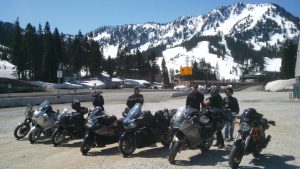
Still thinking about heated gear? Learn how to warm-up your next ride with heated gear that matches any riding style and climate from Gerbing and other leading manufacturers. [read the article]
That is what led us to try two heated garments from Venustas: the Men’s Classic Heated Vest and the Zipper-Up Heated Fleece Jacket. Neither is purpose-built motorcycle gear, but both looked like plausible under-jacket options for touring riders seeking more warmth with less fuss.
We tested both on a six-day, nearly 2,000-mile ride through the Northern California mountains. The result: both work well as heated mid-layers, but for motorcycle use, one clearly stood out.
About Venustas
Venustas may not be a familiar name among motorcyclists, but the company has established a presence in the broader heated apparel market. According to its [company history](https://venustas.com/pages/about-us), Venustas began with the goal of providing outdoor enthusiasts with warmth without the bulk of conventional cold-weather clothing. Its product lineup has since expanded to include heated jackets, vests, fleece garments, and accessories for a variety of outdoor activities.
Unlike established motorcycle heated-gear brands such as Gerbing and Fieldsheer, Venustas primarily designs apparel for general outdoor use. That raises an interesting question for touring riders: Can clothing designed for everyday cold-weather comfort also meet the demands of motorcycling?
How We Tested
Our evaluation took place on a late-September trip through the Sierra and northern mountain country between Reno, Nevada and Redding, California. The route included Highway 89 past Lake Almanor, Highway 36 near Lassen National Park, CA-299 toward Weaverville, and CA-3 north to Yreka.
It was an ideal environment for this kind of test. Morning temperatures were in the upper 40s and low 50s, while afternoon temperatures rose steadily, reaching close to 90 degrees by the time we arrived in Red Bluff. In other words, we had exactly the kind of day-to-day and hour-to-hour temperature variation that often leads riders to rethink what they wear under a motorcycle jacket.
For testing, we wore the Venustas garments over a cotton T-shirt and under a Firstgear Kilimanjaro riding jacket.
What We Tested: Heated Vest and Fleece Jacket
The two garments take slightly different approaches to heated comfort.
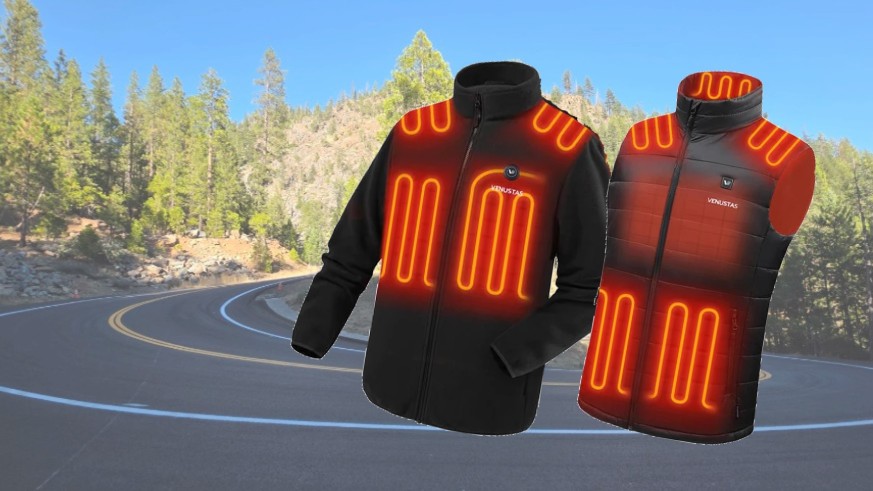
The Venustas heated fleece jacket uses five heating zones: two in the chest, two in the shoulders, and one across the back. Notably, neither the sleeves nor the collar is heated. The fleece jacket comes with a smaller 5,000mAh battery rated at 7.4V and 37Wh.
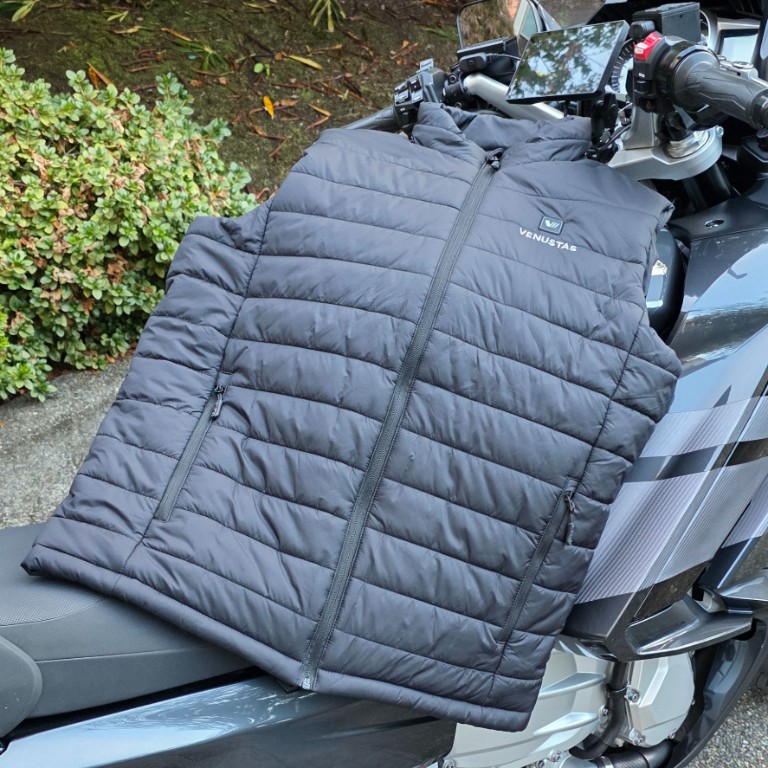
The heated vest uses six heating zones: two in the shoulders, one in the back, two in the front pocket area, and one in the collar. That collar turned out to be a major differentiator. The vest ships with a larger 10,000mAh battery rated at 7.7V and 77Wh.
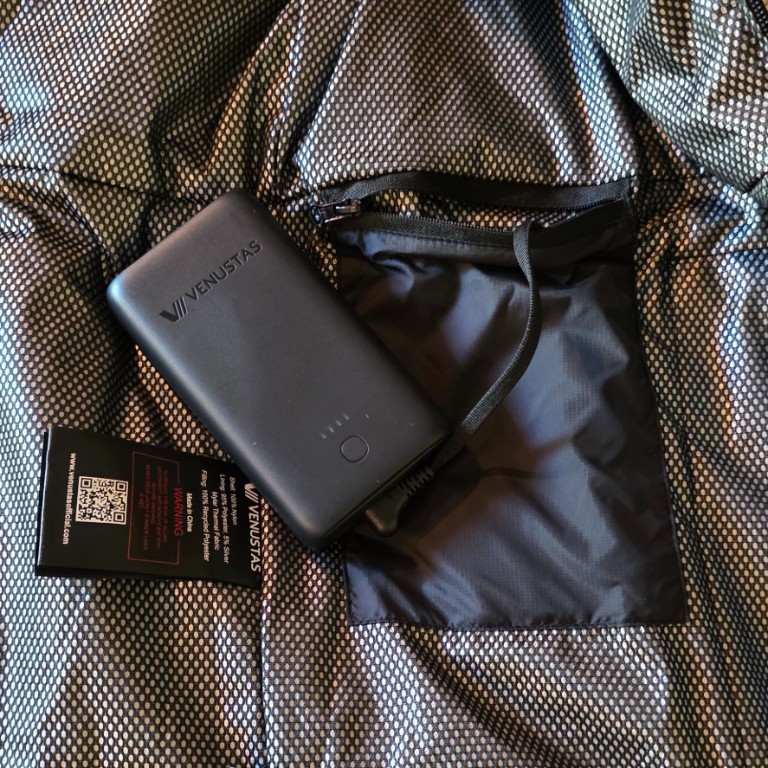
Both batteries fit into a left-side interior zippered pocket just above the beltline and connect through a universal plug inside the garment. Both also use USB-C charging input and can double as power banks for charging devices such as a phone.
Venustas says battery working time depends on battery size, the number of heating panels, and the selected heat setting. In the supplied literature, the larger battery is rated for up to 20 hours and the smaller battery for up to 10 hours.
Fit Under a Riding Jacket
This is one of the first questions any rider will ask: do these garments actually work as mid-layers under a motorcycle jacket?
The answer is yes.
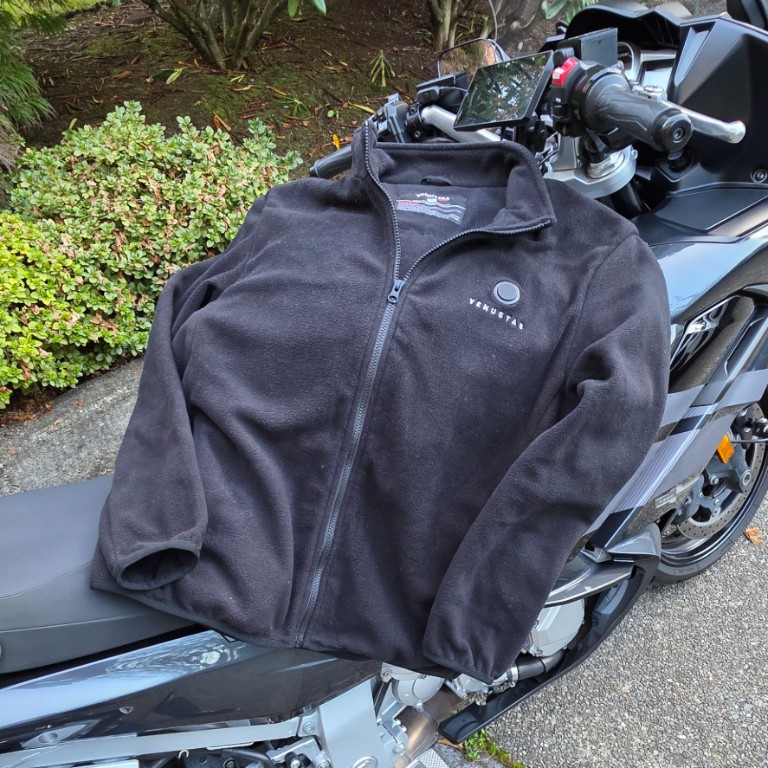
The fleece jacket fit snugly but comfortably under the Kilimanjaro. Even though Venustas markets it as a fleece jacket, it wears more like a liner, which in this case is a positive. It added warmth without noticeably restricting arm movement, and once on the bike it quickly disappeared from conscious notice.
The vest is actually a bit bulkier than the fleece jacket, but because it has no sleeves it still slips under a riding jacket easily and, of course, does nothing to interfere with arm movement.
Both made the outer riding jacket fit a bit more snugly, but zippers and snaps still operated normally and the extra bulk soon became unnoticeable.
Sizing is worth mentioning. We did not find that these garments run large. If your usual size puts you between two sizes — for example, a medium that sometimes borders on large — we would lean toward ordering the larger Venustas size. That advice applies to both men’s and women’s sizing.
Heating Performance on the Road
Both garments impressed us with how quickly they produced noticeable warmth. We felt appreciable heat within roughly 20 seconds.
Venustas uses its proprietary “Heatwave” carbon-fiber heating panels and notes that the system includes sensors to prevent overheating. In practical terms, what we experienced was quick warm-up and even heat distribution.
Both garments did a good job warming the chest, back, and shoulders. Heat zones felt evenly warm, with no obvious hot or cold spots. For motorcycle use, that matters more than simply posting a high temperature number. What riders really want is stable, useful warmth in the core.
The fleece jacket worked well, but its limitations became more obvious once we spent time with the vest. The fleece does not heat the collar or sleeves. The absence of heated sleeves is noticeable, but it did not make cold-weather riding unpleasant. Like many riders who have used traditional heated gear from brands such as Gerbing and Fieldsheer, we have long believed that core heat matters most.
Still, the vest introduced one feature that proved surprisingly valuable: its heated collar.
That heated collar was the standout feature of the entire evaluation.
It wraps the neck in even, complete warmth, and on a motorcycle that matters. Anyone who has ridden into a chilly morning knows how much comfort can be lost around the neck area. The vest’s collar made a real difference, and it was so effective that we often avoided the high setting altogether.
If there was one feature that pushed us toward the vest over the fleece jacket, this was it.
Temp Control: A Notable Riding Drawback
Here is where the Venustas garments reveal their biggest compromise for riders.
Both use a controller mounted on the left chest. A long press of the button powers the garment on and begins the preheat cycle. According to the supplied manuals, preheat reaches 140 degrees on the vest and 130 degrees on the fleece jacket, then automatically drops to medium. Additional button presses cycle through the three heat levels: high, medium, and low.
That all works fine while standing around in street clothes.
But once you zip up a motorcycle jacket over the top, the chest-mounted controller becomes difficult to access. Trying to press it through the outer jacket while wearing gloves is imprecise at best. In practice, it is effectively out of reach while riding.
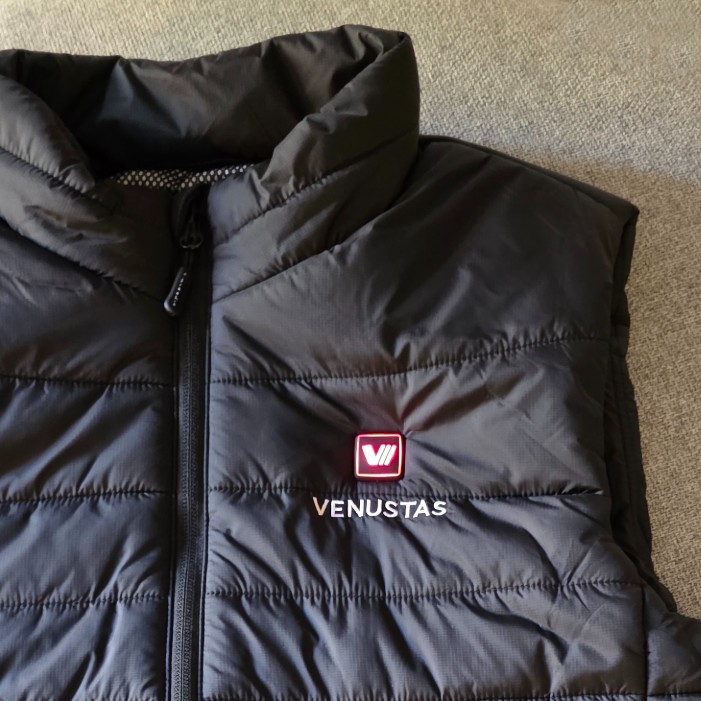
That means riders should think ahead. The best approach is to power the garment on, let it complete the preheat cycle, select the preferred setting, and then finish suiting up. If a change is needed later, the realistic answer is to make the adjustment during a stop.
This is an area where motorcycle-specific heated liners still have an advantage. Many place the temperature controller lower on the garment where it remains easier to reach under an outer jacket.
Battery Life in Real Touring Use
Real-world battery performance matters more than laboratory claims, and here the Venustas garments did well.
Yes, runtime depends on the selected temperature and the number of active heating panels. But in our use, the included batteries were more than sufficient. Each garment kept us warm when needed throughout the day with plenty of power remaining.
In fact, we found that it was only necessary to recharge the batteries every few days.
That result makes sense in the real world of sport touring. Heated gear is often most useful in the morning or at higher elevations, but as the day warms, riders can switch off the heat and continue wearing the garment as a conventional mid-layer. Both the vest and the fleece jacket worked well in that role, bridging the gap between chilly mornings and warmer afternoons.
Initial charging time to full was consistent with the instructions at about six to seven hours. We also noticed that the batteries held their charge well when not in use, with no noticeable reduction over a two-week period.
One additional practical benefit: the battery never created an uncomfortable pressure point. Despite its location in the interior pocket on the left side above the belt, it remained unobtrusive under riding gear.
Off the Bike
Battery-powered heated gear becomes more appealing when it remains useful after the ride, and both Venustas garments pass that test.
The vest is excellent for cool evenings and looks good off the bike. It feels like a premium product, with quality materials and attention to detail that give it a more polished feel than the fleece jacket.
The fleece jacket has a softer, more relaxed feel. It lacks much structure, but that makes it comfortable right out of the box. Even without turning on the heat, it works well as a warm casual layer on colder evenings.
Both garments are machine washable, and both use quality zippers with sturdy, well-sewn seams.
Venustas also offers buyers the option to upgrade the included battery or buy an extra battery separately. Charging cables are included, though power adapter plugs are not.
As for warranty coverage, Venustas backs the heating elements with a three-year limited warranty and the batteries with a one-year limited warranty. Full details are available on the company’s warranty page.
The Verdict: A Qualified Recommendation
So, can heated clothing designed for general outdoor use serve as a practical alternative to motorcycle-specific heated gear? Based on our six-day, nearly 2,000-mile evaluation, the answer is a qualified yes.
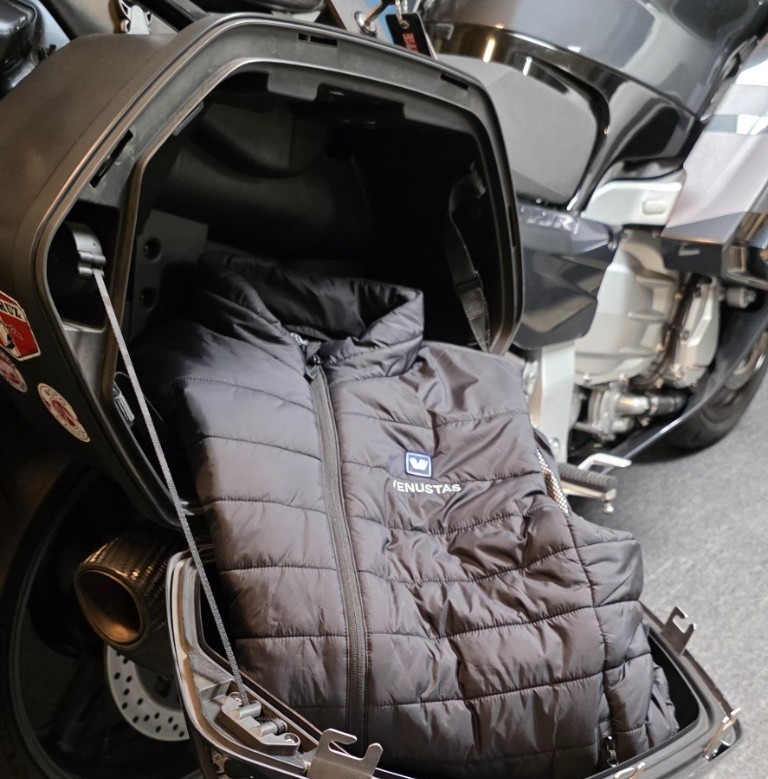
Both Venustas garments delivered effective core warmth, fit comfortably beneath protective riding gear, and provided more than adequate battery endurance for our touring needs. Their self-contained batteries eliminate the need for electrical connections to the motorcycle, while their conventional styling makes them equally useful off the bike.
The principal qualification concerns temperature control. Unlike many motorcycle-specific heated liners, the Venustas garments position their controllers on the upper chest, making them difficult to operate beneath a riding jacket. Riders must anticipate their heating needs before departure and plan to make adjustments during stops.
For riders who frequently encounter sustained cold conditions and want convenient temperature adjustments while riding, purpose-built motorcycle heated gear remains a better option. But for those who encounter chilly mornings, changing mountain temperatures, and occasional cold-weather riding, Venustas offers a compelling alternative.
Between the two products, our recommendation is the Venustas Men’s Classic Heated Vest. Although the fleece jacket provides comfortable insulation and useful electric warmth, the vest delivers heat where it counts without adding material around the arms. Its heated collar was the standout feature of our evaluation, providing exceptional comfort that ultimately made it our preferred choice for sport touring.
Product Pricing
– Venustas Men’s Classic Heated Vest: about $150, including battery.
– Venustas Zipper-Up Heated Fleece Jacket: about $140, including battery.
Was this article helpful?
Thank you for your feedback!
Please email the editor with any additional comments.
Your feedback is used only by American Sport Touring. We do not store or sell your information.
Please read our Privacy Policy.