CE Level 1 vs. Level 2 Armor: What Sport Touring Riders Should Know
Not all armored gear offers the same level of impact protection. Understanding what CE Level 1 and Level 2 really mean helps riders choose equipment that works on long days, unfamiliar roads, and demanding sport touring miles.
Motorcycle armor is easy to ignore right up to the moment it is not. A jacket may look substantial, and a pair of pants may feel rugged, but the armor inside determines how much protection the gear actually delivers.
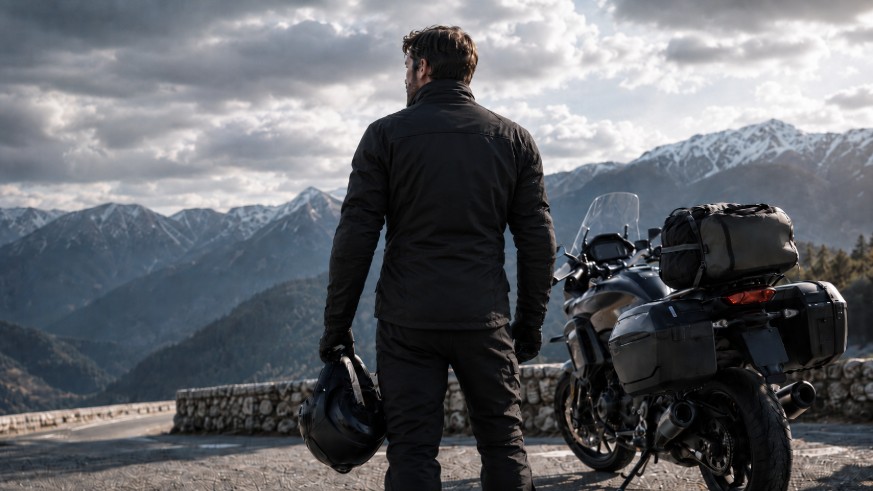
For sport touring riders, that distinction matters. Days are longer, speeds are higher, and the conditions are rarely controlled—weather swings, unfamiliar roads, mountain miles, interstate slogs, and fully loaded bikes are all part of the equation.
This is not about spec-sheet bragging rights. It is about choosing protection that still makes sense hundreds of miles from home, late in the day, when fatigue sets in and the road gets technical.
What CE Ratings Actually Mean
CE-rated motorcycle armor is tested to European impact-protection standards. For most riding gear, the relevant family is EN 1621, which covers impact protectors used in motorcycle clothing.
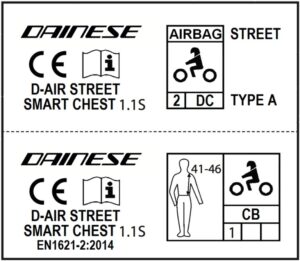
The most common types of armor riders will encounter are:
- EN 1621-1: limb protectors, such as shoulders, elbows, knees, and hips
- EN 1621-2: back protectors
- EN 1621-3: chest protectors
Within those standards, armor is typically rated Level 1 or Level 2.
At its core: Level 1 armor allows more impact force to pass through. Level 2 allows less. In practical terms, that is the basic distinction. Level 2 meets a significantly higher impact-attenuation threshold.
Do Not Confuse Armor Levels with Garment Ratings
One point can be confusing: CE Level 1 and Level 2 are armor ratings, not overall garment ratings. They describe the impact protectors used in the gear, such as shoulder, elbow, knee, hip, back, or chest armor.
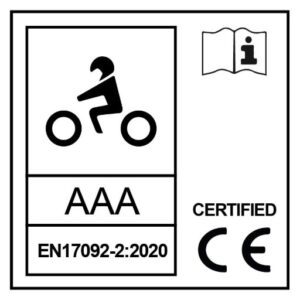
Garments can also carry CE classifications such as A, AA, or AAA. Those ratings apply to the jacket or pants as a whole and address things like abrasion resistance, seam strength, tear resistance, coverage, and construction.
In practical terms, a jacket could include CE Level 2 armor but still have a lower overall garment rating, depending on the shell and construction. Likewise, a well-rated garment still depends on properly placed armor to manage impact. Riders should look at both: the armor rating and the garment rating.
Level 1 Armor: Easier to Live With
CE Level 1 armor is usually thinner, lighter, and more flexible than Level 2. That makes it easier to live with, especially in hot weather or in gear built around comfort and mobility.
For many riders, Level 1 is simply less noticeable in use. It adds less bulk at the elbows, shoulders, knees, and hips and often sits more naturally in the garment.
That matters because gear only protects you if you wear it. Comfortable, well-positioned Level 1 armor is better than more protective armor left at home because it feels stiff, hot, or awkward.
The tradeoff is simple: Level 1 clears the lower protection threshold. It may be enough for some riding, but it is not the top tier.
Level 2 Armor: More Protection, More Demands
CE Level 2 armor is tested to transmit less force than Level 1. In plain English, it is built to absorb more impact before that force reaches the rider.
That matters in sport touring, where riders routinely stack up long days at highway pace, then peel off onto unfamiliar secondary roads, mountain passes, or rougher pavement. Add luggage, a passenger, or simple fatigue, and those are exactly the conditions in which more impact protection begins to pay off.
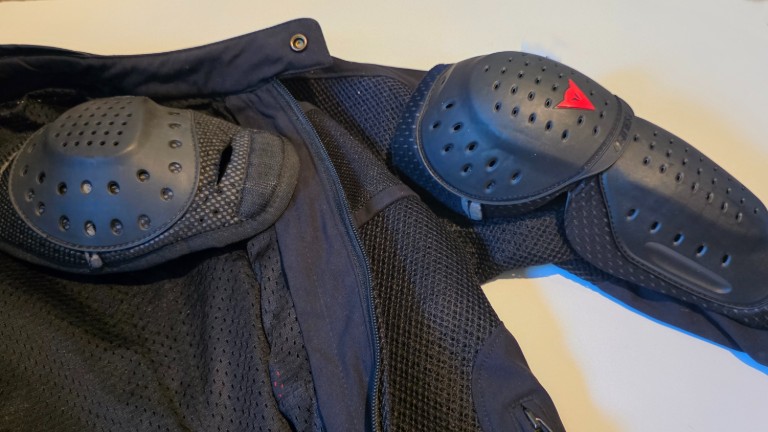
The catch is that Level 2 armor can be thicker, heavier, warmer, or less flexible, depending on the design. Modern protectors are better than ever, but fit still rules. If upgraded armor shifts out of place or makes the garment uncomfortable enough to stay in the closet, the advantage disappears fast.
Why the Back Protector Matters
Many jackets include shoulder and elbow armor but only a thin foam pad in the back pocket. That insert may help the jacket hold its shape, but unless it is actually CE-rated, it should not be mistaken for real impact protection.
For sport touring riders, upgrading the back protector is often one of the highest-value safety upgrades they can make. Many jackets accept a CE-rated insert, but the size and shape still have to match the garment.
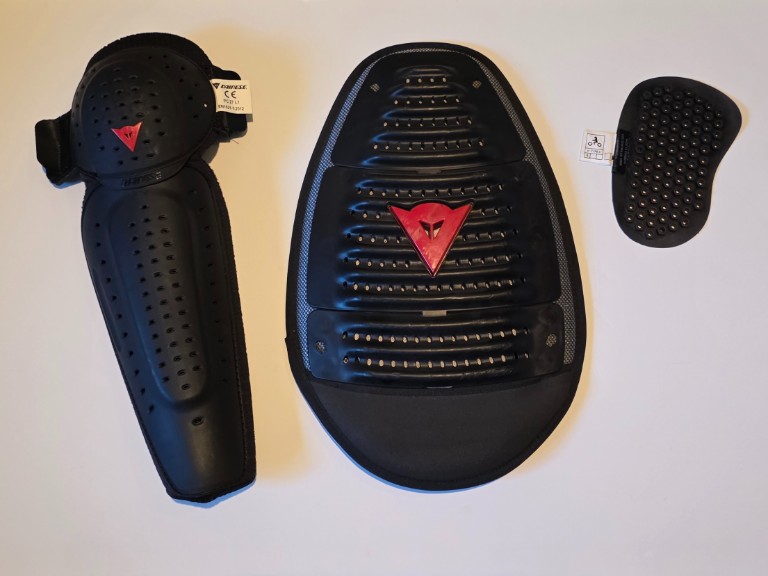
A poorly fitting back protector can ride too high, sit too low, or leave gaps in coverage. When upgrading, check both the rating and the fit while seated on the bike.
Placement Matters as Much as Rating
A CE Level 2 protector offers limited protection if it has rotated away from the impact zone by the time you need it. The armor matters, but the garment is what keeps the armor where it belongs.
That is why fit is so important. Shoulder armor should stay on the shoulder. Elbow armor should cover the elbow with your arms bent in riding position. Knee and hip armor should still cover the right areas when you are seated, not drift out of place.
A poorly fitting jacket or pair of pants can compromise that. Gear that is too loose may let armor rotate, sag, or shift away from the intended impact zone. Gear that is too tight may pull the armor out of position or become uncomfortable enough to distract the rider after a few hours.
In sport touring gear, comfort and adjustability are not luxuries. They help the garment hold the armor where it is supposed to be through long days in the saddle.
Check armor placement on the bike, not just in front of the mirror..
Why Level 2 Is Not Always the Default Choice
It is tempting to default to Level 2 everywhere. In many cases, that is the right call—especially for the back, shoulders, elbows, knees, and hips. But armor still has to work in the real world.
A rider in extreme heat may value airflow and flexibility more. An older jacket may not accept thicker inserts cleanly. A trim-cut garment may become uncomfortable if replacement armor adds too much bulk.
Riding style matters too. A rider heading out for a relaxed day on familiar roads faces different demands than someone knocking out big miles, crossing states, running mountain passes, or traveling two-up with hard luggage. As speed, distance, load, fatigue, and road complexity rise, so does the case for more protection.
The best answer is not simply the biggest number on the label. It is the highest level of protection that fits correctly, stays in place, and remains comfortable enough to wear every time. For many sport touring riders, that will mean Level 2 where practical, but not at the expense of fit or usability.
Armor Rating Is Only Part of the Story
Armor rating is only one part of the protection equation. Jackets and pants also need abrasion resistance, seam strength, secure closures, and proper coverage.
Armor manages impact; the garment handles abrasion and coverage. Strong armor in a weak shell is not enough, and a durable shell without properly placed armor is still incomplete.
For sport touring riders, armor is only part of the system:
- Shell material
- Abrasion zones
- Seam construction
- Armor rating
- Armor placement
- Fit in the riding position
- Jacket-to-pants connection
- Coverage at the wrists, waist, and ankles
A CE label is useful, but it is not the whole answer.
What Sport Touring Riders Should Prioritize
For sport touring riders, the priorities are straightforward—gear has to work across long miles, changing conditions, and full-day comfort.
Start by making sure your jacket and pants have armor at the main impact points: shoulders, elbows, knees, and ideally hips. Then check the back protector. If the jacket only came with a foam insert, upgrading to a properly sized CE-rated back protector is money well spent.
Be honest about how you ride. Sport touring can mean anything from an easy weekend run to a multi-state trip with long interstate stretches, fast backroad sections, weather changes, and late-day fatigue. As pace, mileage, load, and road complexity increase, so does the value of armor that offers more protection and stays in place.
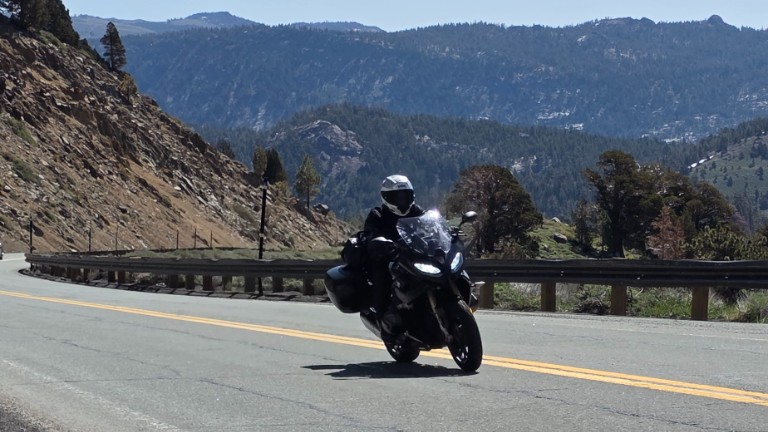
If Level 2 upgrades are available without compromising fit, focus first on the back, shoulders, elbows, knees, and hips.
Then confirm that the armor stays in place when you are seated on the bike. That is the real test.
A Smarter Upgrade Strategy
You do not necessarily need to replace an entire jacket or pair of pants to improve protection. Many garments can be upgraded with better armor.
A sensible approach:
- Check what armor is already installed. Look for CE markings on the protectors themselves.
- Identify the standard and level. For example, EN 1621-1 Level 1 or Level 2 for limb armor.
- Inspect the back protector. If it is not CE-rated, consider upgrading.
- Check fit carefully. Replacement armor should fit the pocket without folding, bunching, or shifting.
- Test it on the motorcycle. Sit in the riding position and confirm comfort and coverage.
It is a practical way to improve existing gear without turning a proven touring setup into an expensive do-over.
The Bottom Line
CE Level 1 and CE Level 2 are not marketing terms. They are tested standards, and for sport touring riders the difference is worth understanding. Level 1 generally favors comfort and flexibility; Level 2 is designed to let less impact force reach the rider. The right choice depends on fit, climate, and how—and how hard—you actually ride.
Riders covering long distances, tackling unfamiliar roads, or carrying more load and speed should give Level 2 serious consideration wherever it fits properly and stays comfortable. The goal is not gear that impresses on a hanger—it is gear that still performs late in the day, when conditions are less forgiving.
Wear gear that fits correctly, keeps armor where it belongs, and matches the reality of your riding—not just the idea of it.
Was this article helpful?
Thank you for your feedback!
Please email the editor with any additional comments.
Your feedback is used only by American Sport Touring. We do not store or sell your information.
Please read our Privacy Policy.