What a Great Sport Touring Jacket Really Needs to Do
The best sport touring jackets reveal themselves somewhere between the first cold mile of the morning and the last hot slog home. They are asked to block wind, manage heat, shed rain, stay comfortable for hours, and still provide the kind of protection riders cannot afford to compromise.
That is what makes the category so demanding. A true sport touring jacket has to bridge performance and long-distance practicality, delivering real protection, a credible weather strategy, useful ventilation, and a fit that works on the motorcycle rather than just in the mirror.
Protection Is Non-Negotiable
For all the talk about waterproof membranes, vent schemes, and premium materials, the first job of any motorcycle jacket remains the same: protect the rider when the day goes wrong. In sport touring, that requirement matters even more, because these jackets are expected to do everything without surrendering core crash protection.
That means armor at the shoulders and elbows, a real provision for a back protector, and adjustment that keeps everything where it belongs. Many jackets still ship with only basic foam in the back, so a CE-rated upgrade is not a box-checking exercise; it is the standard serious riders should expect.
Abrasion resistance belongs in the same conversation. Leather remains a benchmark, but modern textile jackets with reinforced impact zones often make more sense for sport touring because they broaden the weather envelope while remaining practical for long days and changing conditions.
Fit Matters More Than Features
One of the easiest mistakes in this category is buying the jacket that looks right on paper rather than the one that works on the motorcycle. Sport touring gear lives in the riding position, not under showroom lighting.
That is why shoppers need to check sleeve length with arms extended, shoulder mobility with hands forward, collar comfort with the head turned, and waist coverage with the rider slightly leaned in. A jacket that fights the body in those moments will get worse over a long day.
That also explains why a jacket that seems a little long or plain off the bike may be the right choice once the miles start to add up. In this segment, honest fit nearly always beats showroom drama.
Weather Versatility is Essential
If there is a defining reality in sport touring, it is that the ride rarely unfolds in one tidy set of conditions. Morning chill gives way to afternoon heat, mountain weather arrives uninvited, and a dry forecast can collapse somewhere beyond the next fuel stop.
That is why broad claims of “all-season” performance are not enough. The real question is how a jacket handles rain, wind, and heat once the miles start stacking up. Most answers still fall into two camps: a waterproof outer shell or a removable waterproof liner.
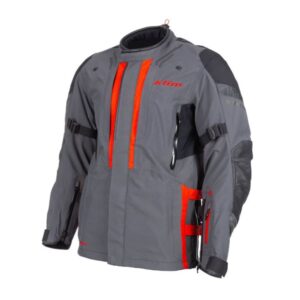
The laminated-shell approach usually wins in sustained bad weather because it keeps the outer layer from soaking through and eliminates the need for a roadside clothing change. That is why jackets such as the KLIM Latitude remain so compelling to serious mileage riders: the design answers the job directly.
A removable liner lowers cost and can improve warm-weather flexibility, but it also demands more planning. If the rain starts before the liner is installed, the rider has to stop and reconfigure, and the outer shell may still grow heavy with water.
Neither system is universally better, but riders who regularly cover long miles in uncertain weather are better served by a waterproof outer shell. Removable-liner designs make the most sense for riders who stay closer to fair-weather use and want a lighter, more adaptable package.
Real-World Example: KLIM Latitude Jacket
The KLIM Latitude represents the premium laminated touring-jacket approach. Its appeal for sport touring riders is straightforward: weather protection is built into the outer shell, rather than handled by a removable rain liner. That can matter on long rides where stopping to reconfigure layers is inconvenient or unsafe. The Latitude also emphasizes adjustability, reduced bulk, stretch panels, and mobility, all of which matter when a jacket has to remain comfortable for full days on the road.
Manufacturer: KLIM
Highlights: Laminated weather protection, long-distance comfort, adjustability
Product link: KLIM Latitude Jacket
Ventilation Aids Comfort and Concentration
Many jackets sound versatile until the temperature rises. Then the difference between useful touring gear and an expensive compromise becomes obvious in traffic, on slow climbs, and at fuel stops where trapped heat has nowhere to go.
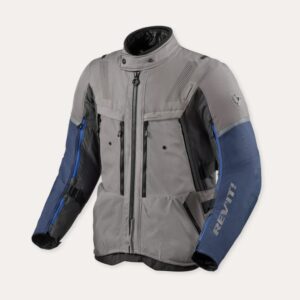
Real ventilation is a system, not a brochure bullet. The best jackets move air in and then give it somewhere to escape, which is why designs such as the REV’IT! Sand 5 H2O continue to appeal to riders who want range across conditions rather than one-note specialization.
Vent placement matters as well. A chest vent hidden behind a windscreen or blocked by a tank bag delivers far less relief than its size suggests, so riders need to judge airflow in the context of the motorcycle they actually ride.
Real-World Example: REV’IT! Sand 5 H2O Jacket
The REV’IT! Sand 5 H2O shows how adventure-touring design can overlap with sport touring needs. It is not a pure road-racing jacket, nor is it a simple commuter shell. Its value is versatility: multi-season use, touring-oriented coverage, and a more sport-driven cut than the earlier Sand 4 generation. For riders on crossover sport tourers, tall-rounder motorcycles, or road-focused adventure bikes, this type of jacket can make sense when the ride includes changing temperatures, long mileage, and occasional rougher conditions.
Manufacturer: REV’IT!
Highlights: Multi-season versatility, modular touring design, crossover sport touring use
Product link: REV’IT! Sand 5 H2O Jacket v
The Best Work as Part of a System
Experienced riders tend to learn the same lesson: no jacket covers every temperature on its own. The best ones create room to adapt, whether that means a base layer at dawn, a heated liner in shoulder season, or less bulk once the day warms up.
Built-in thermal liners have their place, but riders who cover varied conditions are usually better off choosing their own layering pieces for greater flexibility across seasons and temperatures.
The key is adjustment range: enough room for a cold-morning layer, but enough cinching at the arms, waist, and cuffs to keep the jacket secure in warm weather.
Practicality Matters
Once protection, fit, weather management, and ventilation are settled, the conversation turns to the quieter details that shape a long day in the saddle. Storage is one of them, and it matters more than many riders expect.
A useful sport touring jacket keeps essentials close at hand without creating bulk or interfering with comfort. Water-resistant outer pockets and easy-to-reach internal storage are especially valuable for items such as earplugs, a wallet, a phone, or a key card, and the best layouts stay simple, secure, and glove-friendly.
Small Stuff Decides Long-Term Use
From there, the evaluation gets even more specific, because the contact points and hardware are often what separate a jacket that seems impressive in brief use from one that proves itself over thousands of miles.
A rough collar, awkward cuff, or flimsy zipper can ruin an otherwise capable jacket. Soft collar linings, clean cuff closures, storm flaps, and glove-friendly zippers are not luxuries on a touring garment; they are part of long-distance usability.
The front zipper needs to be robust and easy to start, vent zippers need to be usable at a stop, and the cuffs need to work cleanly with the rider’s preferred glove style.
Think Visibility
Those details extend beyond comfort and convenience. Sport touring often means early departures, late arrivals, rain, fog, and long highway miles, which is why visibility deserves a place in the same practical conversation.
High-visibility panels help, but even understated jackets need reflective accents on the chest, back, shoulders, or arms. The point is simple: be seen when conditions deteriorate.
Coverage Matters
The same thinking applies to how the jacket works with the rest of the rider’s gear. A jacket-to-pants connection zipper may not be glamorous, but it is a worthwhile feature because it helps prevent the jacket from riding up, improves coverage in a slide, and reduces drafts on long days.
A full-circumference zipper is ideal, but even a shorter rear connection is better than none.
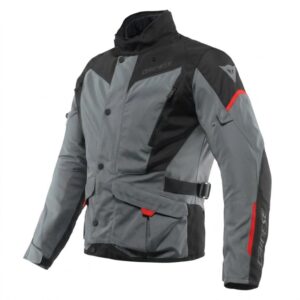
Real-World Example: Dainese Tempest 3 D-Dry Jacket
The Dainese Tempest 3 D-Dry is a useful example of a waterproof touring jacket with a more athletic cut. It uses Dainese’s D-Dry waterproof membrane, includes a removable thermal liner, and comes with Pro-Armor Level 2 protectors at the elbows and shoulders. For sport touring riders, the Tempest 3 illustrates an important point: a practical jacket does not have to be the most expensive option in the category. The essentials are protection, weather range, fit, and comfort in the riding position.
Manufacturer: Dainese
Highlights: Waterproof touring function, included Level 2 limb protection, value-oriented versatility
Product link: Dainese Tempest 3 D-Dry Jacket
The Right Jacket Is the One That Matches the Ride
Taken together, all of these details point to the same conclusion: there is no single “best” sport touring jacket in the abstract. The category is too broad, the conditions too varied, and the riders’ needs too different for that kind of easy answer.
The better question is this: “What jacket gives this rider the best protection, comfort, weather range, and usability for the rides they actually take?”
For many riders, the answer is a textile jacket with quality armor, useful adjustment, real ventilation, and weather protection that fits the ride. The Dainese Tempest 3 D-Dry is a good example of that formula, combining a waterproof membrane, removable thermal liner, and Pro-Armor Level 2 protectors in a sportier touring package. The larger point matters more than the badge: a jacket does not need to be a top-tier laminated shell to be a credible sport touring option.
What the Best Jackets Ultimately Get Right
That is why the best sport touring jackets are rarely memorable because of any one claim on a hangtag. They earn their reputation the old-fashioned way: by disappearing into the ride while quietly doing a difficult job well.
They protect without distraction, adapt without drama, and stay comfortable long enough for riders to stop thinking about the jacket and keep thinking about the road.
For shoppers, the takeaway is straightforward: prioritize protection, confirm fit in the riding position, understand the jacket’s weather strategy, and be honest about the conditions you actually ride in. Get those calls right, and the right jacket stops feeling like a purchase and starts feeling like a trusted tool for the miles ahead.
Editor’s note: Product examples included in this article are intended to illustrate important points and tradeoffs, not to rank or endorse specific products. AmericanSportTouring.com receives no compensation for featuring these products and does not participate in affiliate marketing programs.
Was this article helpful?
Thank you for your feedback!
Please email the editor with any additional comments.
Your feedback is used only by American Sport Touring. We do not store or sell your information.
Please read our Privacy Policy.